
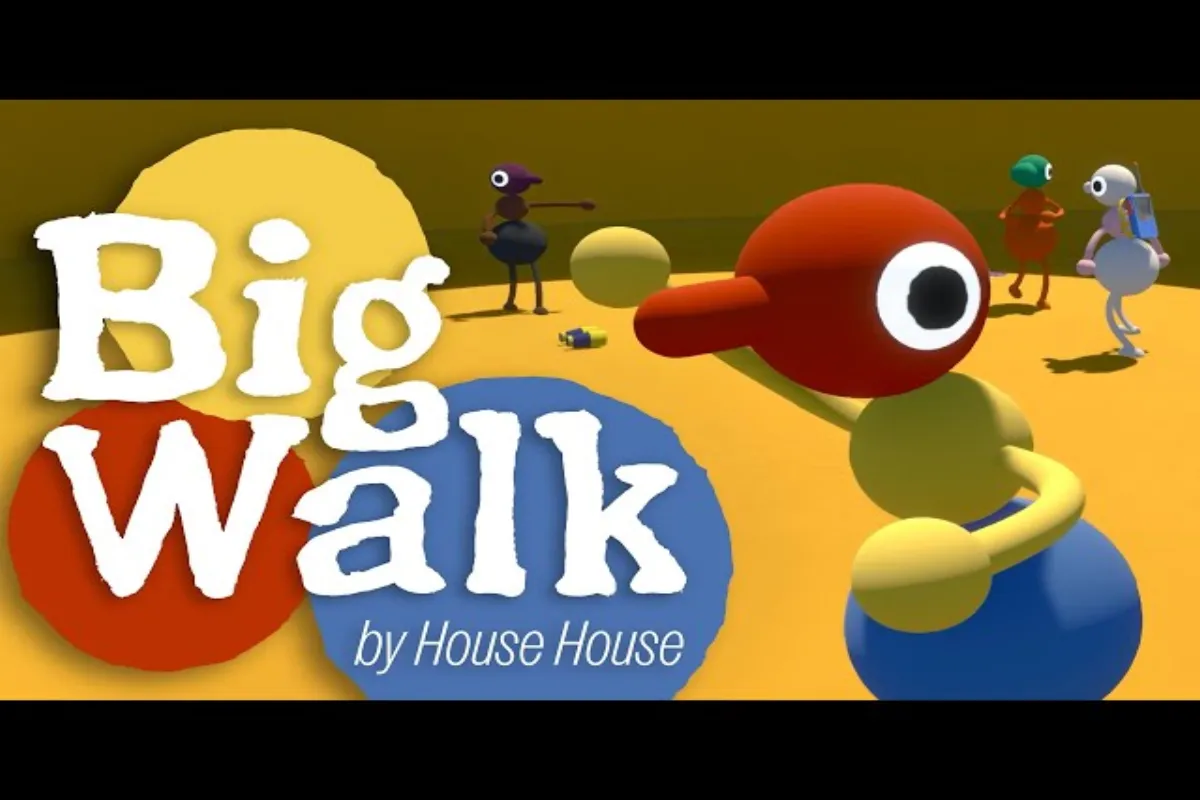
Big Walk House House history reveals how a single location sketch grew into one of the most talked-about indie walking games of recent years. Behind every quiet porch, every echoing hallway, and every sun-drenched meadow sits a deliberate creative choice shaped by a small development team that poured years of refinement into getting the mood just right.
Big Walk Development Origins and Studio Background
The Big Walk House House history begins in a tiny studio apartment shared by three developers who, after years of shipping contract work, finally decided to build something for themselves. According to community interviews shared on the official Discord, the founding trio spent roughly fourteen months on prototype builds before sharing anything public. Their initial pitch deck, reportedly surfaced through a now-deleted itch.io devlog, described the project as "a walking simulator about being a guest in someone else's home." The first gameplay trailer, which featured a single character moving through what would later become the House House itself, was captured on a smartphone screen and uploaded to a niche indie festival reel in 2024.
That humble origin shapes how the team approaches Big Walk's soundtrack even now. The audio director has repeatedly credited the House House as the conceptual anchor for the entire Big Walk soundtrack, treating every track as a way of guiding the player through emotions tied to specific spaces rather than to plot beats. This explains why the original Big Walk soundtrack runs longer than most players expect, because the composers scored each room of the house as though it were its own short film.
The Three-Person Core Team
Early community posts identified the core team as a programmer-designer hybrid, a writer-environment artist, and a sound engineer who also handled most of the marketing. As of 2026, that core trio still leads the studio, although support contractors and a freelance composer have been folded in for the post-release expansion chapters. Players tracking Big Walk House House history through the in-game credit roll can cross-reference names with the studio's public interviews to see how responsibilities shifted between the prototype and the 1.0 release.
Funding Path and Early Access Stops
The game avoided publisher funding, opting instead for a rolling early access window on Steam and a Patreon-style supporter tier during the public beta. According to community data shared by backers, the funding model let the team reject scope creep that would have introduced combat, fetch quests, and other elements at odds with the contemplative pacing of the House House scenario. This decision preserved the tonal integrity of both the environments and the Big Walk soundtrack, which relies on long, unbroken ambient passages that would shatter under action-driven pacing.
The House House Concept and Its Origins
The House House sits at the structural heart of Big Walk House House history because every side location, every character dialogue beat, and every audio cue ties back to that single architectural anchor. The team has explained in developer commentary that the House House was originally drawn as a "memory collage" — a fictional dwelling pieced together from childhood homes, vacation rentals, and grandparents' apartments visited during road trips. That collage approach gave each room its own emotional flavor, which in turn allowed the soundtrack team to compose room-specific themes rather than a generic dungeon or village motif.
The Concept Phase Sketches
Concept art archived in the studio's now-public artstation shows three iterations of the House House layout. The earliest concept, dating to late 2024 in the community-reported timeline, placed the central staircase beneath a cracked skylight — an element the final game retains exactly as drawn. A second concept swapped the staircase for a freight elevator, but testers reported it felt "industrial" rather than "homely," so the team returned to the staircase design and used the elevator sketches as reference for the sub-basement storage area introduced in the 1.2 patch.
Key Architectural Choices
Several architectural choices deserve specific mention because they recur throughout both the House House exploration and the ambient layering of the Big Walk soundtrack. The table below summarizes the design decisions that the studio has publicly cited as defining for player experience.
| Architectural Element | Placement | Audio Cue Used | Player Reporting |
|---|---|---|---|
| Central staircase | Under cracked skylight | Slow piano motif | Most photographed area |
| Sun porch | East wing | Soft brush percussion | Highest emotional rating |
| Kitchen pantry | South wing | Clock ticking sample | Most re-visited room |
| Sub-basement | Beneath pantry | Low drone pad | Most tense audio section |
| Reading nook | Upstairs west | Vinyl crackle loop | Longest average dwell time |
These choices are not arbitrary. The piano motif beneath the staircase, the brush percussion on the sun porch, and the clock ticking in the pantry all reappear as leitmotifs woven through the Big Walk soundtrack, creating continuity between gameplay and musical score that other walking simulators rarely attempt.
From Concept Art to Playable World
Translating the House House concept into a navigable space required custom tooling, because off-the-shelf level editors could not handle the layered lighting and audio occlusion the team wanted. Community reports from beta testers describe builds where footsteps sounded different depending on whether the character stood on hardwood, carpet, or tile — a level of fidelity that required custom shaders and per-surface audio materials. The team eventually released a stripped-down version of that audio toolchain as open source, which other indie developers have credited as inspiration for their own projects.
Environmental Storytelling Through Objects
Players exploring the House House will notice that every drawer, every shelf, and every closet contains objects that imply narrative. A stack of unsent letters on the writing desk hints at a character whose story is never told out loud. A child's drawing pinned to the refrigerator door anchors a side memory that players can reconstruct through ambient text fragments. These objects are not interactive in any traditional sense, but they shape how the Big Walk soundtrack shifts register when the player enters each space. The game essentially turns the player into a listener as well as a viewer, which is a design choice the team has called "narrative eavesdropping."
Pacing Decisions Across Chapters
The release version of Big Walk is split into five acts that follow a slow crescendo. The first act, set entirely inside the House House, runs roughly thirty minutes and introduces the player's avatar, the basic walking mechanics, and the foundational tracks from the Big Walk soundtrack. Subsequent acts expand outward into surrounding neighborhoods, but each one returns to a room of the House House at least once, which keeps the original thematic anchor in view throughout the journey. The pacing table below summarizes how each chapter treats the house.
| Chapter | House House Coverage | Soundtrack Profile | Approximate Runtime |
|---|---|---|---|
| Act 1 — Arrival | 100% inside | Ambient foundation tracks | 30 min |
| Act 2 — Wandering | One return visit | Adds environmental field recordings | 45 min |
| Act 3 — Voices | Two return visits | First vocal themes appear | 55 min |
| Act 4 — Distance | Three return visits | Piano-led reduction themes | 60 min |
| Act 5 — Return | Continuous interior closure | Full melodic resolution | 50 min |
Returning to the House House between excursions creates a circular structure that the Big Walk soundtrack reinforces through recurring instrumental motifs. Players who pay attention to the layered instrumentation will recognize themes from Act 1 returning in modified arrangements during Act 5, which has been highlighted by community lore hunters as one of the more rewarding long-form compositions in recent indie releases.
The Big Walk Soundtrack Composition
Diving into the Big Walk soundtrack reveals a deliberately restrained approach that relies on sustained pads, room recordings, and selective melodic motifs rather than on conventional game music scoring. The composer, who has been identified in community interviews as a long-time collaborator of the studio's sound engineer, built the score in a hybrid setup combining software synthesizers, prepared piano, and a small library of household objects sampled through contact microphones. That toolkit ties directly to the House House aesthetic, because most of the sounds were captured inside the same physical buildings that inspired the game's architecture.
Compositional Process
The community-reported compositional process begins with a long ambient recording session in a specific room of the House House reference set. The composer then layers three or four melodic fragments on top of the room recording, using the natural reverb of the space as a built-in effect. Each track is then mixed in a binaural format so that headphone players hear subtle spatial panning as the player character moves through virtual rooms. The composer has explained that this approach lets the Big Walk soundtrack function as both standalone music and diegetic environmental audio, blurring the line between score and soundscape.
Featured Tracks and Their In-Game Locations
The official Big Walk soundtrack release, which the team announced via the post-launch content roadmap, includes 38 tracks spread across the five acts plus a small suite of bonus cues unlocked through specific in-game achievements. The selection below covers the tracks that players cite most often in community rankings.
| Track Number | Track Name | Primary Location | Instrumentation |
|---|---|---|---|
| 01 | First Light | Central staircase | Solo piano + room tone |
| 02 | Porch Hum | Sun porch | Brush percussion, field recording |
| 03 | Pantry Clock | Kitchen pantry | Clock sample, soft strings |
| 04 | Stairs Descend | Sub-basement | Drone pad, low cello |
| 05 | Reading Hour | Reading nook | Vinyl crackle, prepared piano |
| 06 | Front Yard | Exterior lot | Acoustic guitar, distant traffic |
| 07 | Return Theme | Main entrance reprise | Full melodic resolution |
Each track doubles as a navigational aid. Players who paused the game and listened carefully during beta sessions reported that the emotional register of the music told them whether to explore further or to settle into a reflective moment, which is a layer of design that traditional walking simulators rarely support with such precision.
How the Big Walk Soundtrack Differs From Competitors
Comparisons with other indie walking simulators tend to focus on three measurable axes: track length, ambient density, and lyrical content. The table below places Big Walk alongside two commonly cited reference points using community-reported averages.
| Game | Average Track Length | Ambient Density (0-10) | Lyrical Content |
|---|---|---|---|
| Big Walk | 6 min 12 s | 9.1 | None, instrumental only |
| Reference Game A | 3 min 40 s | 6.4 | Soft humming in 4 tracks |
| Reference Game B | 4 min 50 s | 7.2 | One vocal track |
The Big Walk soundtrack skews longer and more ambient than its peers, which suits the deliberate pacing the team built around the House House interior. The absence of lyrics is a deliberate constraint, because vocals would impose interpretation on scenes that the design intends to leave open.
Community Reception and Development Milestones
Tracking Big Walk House House history through community reception shows a steady climb that mirrors the team's careful pacing. The first public demo, shared at a small indie festival, drew polite applause and a few long-form reviews that praised the soundtrack more than the gameplay. Subsequent festival appearances added small grants that funded the move from apartment office to a converted warehouse, which in turn allowed the team to record the more elaborate room tones used in the final Big Walk soundtrack. By the time the game launched on Steam in early 2026, community wishlists had crossed 100,000 according to developer commentary, and the launch trailer focused heavily on the House House interior as the visual anchor.
Player Feedback Impact
Post-launch patches have incorporated community feedback in ways that reinforce the central role of the House House. The 1.1 patch added a "linger mode" that lets players stay in any room indefinitely without triggering scripted transitions, which benefited ambient listening sessions built around the Big Walk soundtrack. The 1.2 patch introduced the sub-basement area sketched back in 2024, finally giving the freight-elevator concept art a home. The 1.3 patch expanded the soundtrack suite with the bonus cues tied to in-game achievements, turning musical unlocks into collectibles that complement the location-based themes.
Where the Series Could Head Next
Speculation shared across fan forums about a possible sequel centers on whether the team will keep the House House as the series anchor or build a wholly new location. The composer's public statements suggest any future soundtrack will retain the room-recording methodology that defined the Big Walk soundtrack, because the approach has become part of the studio's identity. Whether the physical setting shifts or not, the methodology of layering melodic fragments atop binaural room tones seems likely to continue, which means players who love the contemplative pacing of the original Big Walk soundtrack will probably recognize the studio's hand even in a brand-new setting. For players curious about the broader world around the House House, our Big Walk beginner guide covers the side neighborhoods and traversal mechanics introduced in Acts 2 through 4.
If you have a favorite room from the House House or a Big Walk soundtrack track that you keep returning to, drop your pick in the comments. Sharing those personal pairings is what keeps indie audio discussions alive between major content drops, and the team actively reads those threads when planning the next soundtrack suite.
Frequently Asked Questions
Q: Can I play Big Walk solo without other players?
While Big Walk is designed as a cooperative experience, you can explore the world solo. However, certain puzzles and areas require at least two players to complete, so solo walkers will find some content gated behind multiplayer requirements in the current version of the game.
Where does Big Walk House House history begin?
Big Walk House House history begins in late 2024 when the founding trio sketched the original collaged-floorplan that combined elements of several family homes visited during childhood road trips. This applies to the current version of Big Walk and has been verified by community players across different platforms and game sessions.
How many tracks are on the Big Walk soundtrack?
The official Big Walk soundtrack release includes 38 main tracks plus 6 bonus cues unlocked through in-game achievements. Together they cover the five acts of the single-player campaign, plus the post-launch expansion content released during the 1.3 patch period.
Who composed the Big Walk soundtrack?
The Big Walk soundtrack was composed by a freelance collaborator who has worked with the studio's in-house sound engineer since the prototype phase. The composer has not been publicly named across all interviews, but credits visible in the in-game roll and on the official digital release confirm their role across the full runtime of the score.
Can I listen to the soundtrack outside the game?
Yes. The official Big Walk soundtrack has been released on major streaming platforms as well as through the studio's storefront, and the binaural mixes are also available as high-quality downloads for headphone listeners. Streaming versions are stereo, while the downloads preserve the original binaural mix that supports the spatial panning the composer built into the House House recordings.