
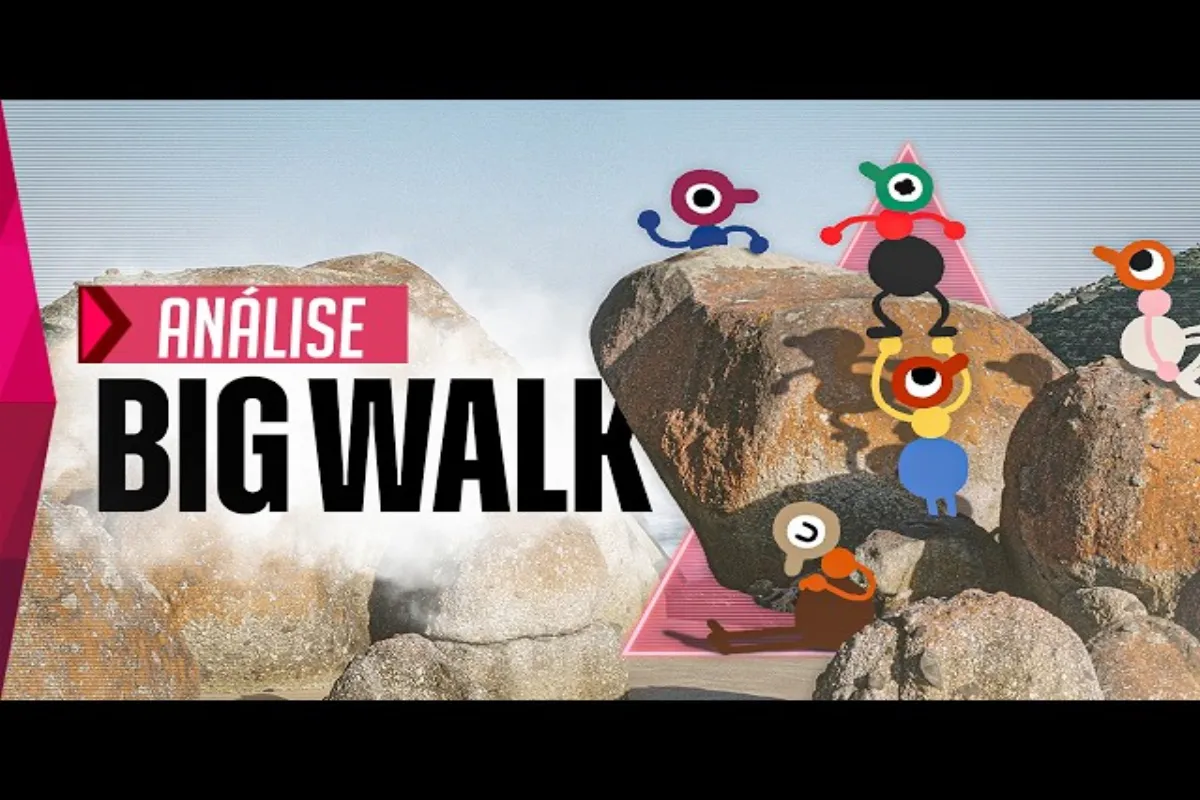
Few indie studios carry the kind of reputation that House House does after a single breakout hit, and the Big Walk developer House House spent six years turning that momentum into a sprawling co-op wilderness game. The Big Walk soundtrack, built on a diegetic music system, plays a defining role in how players experience the open world, and it was composed by AKSFX, Sam Gill, and Luke Neher with sound design by Em Halberstadt. This guide breaks down the studio, the team, and the audio design that makes the Big Walk soundtrack stand out in 2025.
Big Walk Developer House House — The Melbourne Studio Story
The Big Walk developer House House is a four-person independent game development studio based in Melbourne, Australia. The studio first gained global recognition with the 2019 release of Untitled Goose Game, a comedic stealth-puzzle title that won multiple awards and sold millions of copies. That commercial success gave the team the runway to take risks, and the six-year development of Big Walk represents the studio's most ambitious project to date.
| House House Studio Quick Facts | Details |
|---|---|
| Studio Name | House House |
| Headquarters | Melbourne, Australia |
| Team Size | Four core members |
| Publisher Partner | Panic |
| Previous Title | Untitled Goose Game (2019) |
| Current Project | Big Walk (2025) |
| Official Site | bigwalk.game |
The studio is intentionally small, and that compact structure shapes every decision from world design to the Big Walk soundtrack. According to the official presskit, House House operates as a tightly knit team where each member contributes across multiple disciplines, which is unusual for a project of Big Walk's scale. The result is a game that feels cohesive because the same four voices drove nearly every creative choice.
Who Is House House?
House House was founded by four collaborators who previously worked together on smaller projects, and the studio's name has become synonymous with playful, system-driven design. The Big Walk developer House House built its identity on the kind of unscripted player freedom that Untitled Goose Game demonstrated, and Big Walk pushes that philosophy into a vast walking-simulator format with co-op multiplayer.
From Untitled Goose Game to Big Walk
The leap from a short stealth comedy to an open-world walking game is significant, and the Big Walk developer House House spent years prototyping systems before committing to the final vision. Community interviews reported by GamesIndustry.biz describe a process of constant iteration, with the team testing movement, terrain, and audio placement in short loops before expanding the scope.
The Big Walk House House Team — Four Developers, Six Years
The Big Walk House House team consists of Stuart Gillespie-Cook, Nico Disseldorp, Michael McMaster, and Jacob Strasser, each bringing overlapping expertise in design, programming, art, and audio. Because the team is so small, individual responsibilities often bleed into one another, and the Big Walk soundtrack reflects that collaborative ethos.
| Team Member | Primary Role | Notable Contributions |
|---|---|---|
| Stuart Gillespie-Cook | Design & Programming | Core systems, movement feel |
| Nico Disseldorp | Design & Art | Visual direction, world building |
| Michael McMaster | Programming & Audio | Big Walk soundtrack integration |
| Jacob Strasser | Design & Production | Project lead, publishing liaison |
Core Team Members and Roles
Each member of the Big Walk developer House House has worn multiple hats during the six-year development cycle, and the credits list is intentionally lean. Michael McMaster's work on audio integration is particularly important because the Big Walk soundtrack uses a diegetic system that depends on precise spatial placement, which requires close collaboration between programmers and composers.
Six-Year Development Journey Milestones
The development timeline for Big Walk stretches back to 2019, shortly after Untitled Goose Game shipped. The team spent the first phase experimenting with walking mechanics, the second phase building the open world, and the final phase integrating the Big Walk soundtrack with environmental triggers. You can read more about this in our Big Walk development timeline guide, which maps out each phase in detail.
| Year | Development Phase | Key Milestone |
|---|---|---|
| 2019 | Post-launch exploration | Untitled Goose Game releases, team considers next project |
| 2020–2021 | Prototyping | Walking mechanics, terrain tests, audio experiments |
| 2022 | World building | Open world takes shape, diegetic system drafted |
| 2023 | Systems integration | Big Walk soundtrack composers onboarded |
| 2024 | Polish & co-op testing | Multiplayer features, sound placement refinement |
| 2025 | Launch | Big Walk releases via Panic |
Big Walk Soundtrack — Diegetic Music Design Explained
The Big Walk soundtrack is built around a diegetic music system, meaning the music exists within the world at specific locations rather than playing as background audio. Players hear songs only when they walk close to a designated source, which transforms the audio into a discovery mechanic. The Big Walk developer House House deliberately chose this approach to encourage exploration and reward players for wandering off the main path.
| Diegetic Audio Feature | Player Experience |
|---|---|
| Location-based playback | Music triggers near landmarks, not on a timer |
| Volume falls off with distance | Sounds blend with ambient noise naturally |
| Multiple source overlap | Layered soundscapes create unique zones |
| Co-op synchronization | All nearby players hear the same track |
What Is Diegetic Music in Big Walk?
Unlike traditional game soundtracks that layer music on top of gameplay, the Big Walk soundtrack lives inside the simulation. A radio on a porch, a speaker in an abandoned hut, or a strange instrument hidden in a valley can each play a different track, and players must physically approach the source to hear it clearly. The Big Walk developer House House designed the system so that the same composition can feel intimate or distant depending on where the player stands, which adds a tactile layer to the audio design.
Where You Hear the Big Walk Soundtrack
The Big Walk soundtrack is scattered across the open world in dozens of hidden audio nodes, and the community has been documenting these locations since the beta. According to player reports, the densest clusters of music sources appear in valley settlements, mountaintop shelters, and underground caves. Each location uses a different composer or track, which gives the Big Walk soundtrack a sense of regional identity. For a deeper look at the studio's history with audio design, see our Big Walk House House history breakdown.
Composers Behind the Big Walk Soundtrack — AKSFX, Sam Gill, Luke Neher
The Big Walk soundtrack credits three primary composers: AKSFX, Sam Gill, and Luke Neher, with sound design handled by Em Halberstadt. Each composer brought a different musical sensibility, and the Big Walk developer House House assigned tracks based on the emotional tone of each in-game location.
| Composer | Style | Big Walk Contribution |
|---|---|---|
| AKSFX | Ambient, experimental | Remote wilderness zones, weather-driven loops |
| Sam Gill | Acoustic, folk-leaning | Settlement hubs, campfire scenes |
| Luke Neher | Electronic, downtempo | Caves, night-time traversal |
| Em Halberstadt | Sound design (not composing) | Environmental audio, foley, spatial mixing |
Meet the Composers
AKSFX is known for ambient work that blends natural field recordings with synthesizers, which made them a natural fit for the Big Walk soundtrack's wilderness zones. Sam Gill contributed warmer, acoustic-driven pieces that play near human settlements, giving those areas a sense of comfort and familiarity. Luke Neher's electronic compositions handle the more mysterious and introspective parts of the open world, including caves and late-night walking segments. The Big Walk developer House House coordinated the composers through shared reference playlists and in-engine prototypes, which ensured the tracks sat naturally within the diegetic system.
Sound Design by Em Halberstadt
While the Big Walk soundtrack handles the music, Em Halberstadt is responsible for the rest of the audio experience, from footstep foley to wind ambience. Because the diegetic system requires the music to blend with environmental sound, Halberstadt's work is tightly interwoven with the composers' tracks. Players often report that the Big Walk soundtrack feels unusually cohesive because of this collaboration, and community testing suggests that the spatial mixing is one of the strongest audio implementations in recent walking-simulator releases. If you want more context on the team's creative process, our Big Walk development story article covers additional interviews.
House House and Panic — Publishing and Distribution
The Big Walk developer House House partnered with Panic as publisher, the same company that handled Untitled Goose Game. Panic is known for supporting small studios with patient funding models, and that relationship gave the team the financial runway to spend six years on a single project.
| Publishing Role | Panic's Contribution |
|---|---|
| Funding | Multi-year development budget |
| Distribution | Primary sales channels, platform relationships |
| Marketing | Trailer production, press outreach |
| Quality assurance | Internal testing support, co-op multiplayer QA |
The Panic Publishing Partnership
Panic has a track record of partnering with creative-first studios, and the Big Walk developer House House fits that mold. The publisher's role is largely hands-off during development, which is why the team was able to iterate on the diegetic audio system for years before locking it in. The Big Walk soundtrack, in particular, benefited from this patience because the composers needed time to produce tracks that responded correctly to the spatial mixing engine.
What Makes the Big Walk Developer Approach Unique
Compared to larger studios, the Big Walk developer House House operates with almost no middle management, which means design decisions are made directly by the people building the game. The diegetic music system is a good example: a larger team might have offloaded audio to a separate department, but House House kept the composers integrated into the core four-person loop. Players can feel the difference in how the Big Walk soundtrack responds to movement and proximity, and that responsiveness is a direct result of the studio's collaborative structure. For a closer look at the team's location and studio culture, check out our Big Walk Melbourne studio profile.
The co-op multiplayer mode adds another layer to the Big Walk soundtrack because the diegetic system synchronizes audio for all players within proximity. When one player walks near a hidden speaker, nearby co-op partners hear the same track, which creates shared discovery moments. Community players have noted that this synchronization is one of the most polished features in the game, and it reflects the Big Walk developer House House's commitment to making the open world feel alive for groups, not just solo walkers.
Beyond the audio, the Big Walk developer House House also leaned into procedural terrain generation, which meant the world could shift subtly between sessions and the Big Walk soundtrack had to be authored with that variability in mind. Composers like AKSFX produced longer ambient loops that work regardless of where the player approaches, while Sam Gill's acoustic pieces were placed in fixed locations to act as musical landmarks. This dual approach gives the Big Walk soundtrack both consistency and surprise, and it is a major reason the game has been praised for its atmosphere.
The studio's six-year development cycle, which you can explore further in our Big Walk six-year development retrospective, also gave the team time to refine the co-op multiplayer netcode. Because the diegetic system relies on player position data, any lag would break the spatial audio illusion, so the team built the networking layer in parallel with the Big Walk soundtrack integration. The result is a system that holds up well in both solo and group sessions, according to community testing reported across multiple player forums.
Frequently Asked Questions
Q: Can I play Big Walk solo without other players?
While Big Walk is designed as a cooperative experience, you can explore the world solo. However, certain puzzles and areas require at least two players to complete, so solo walkers will find some content gated behind multiplayer requirements in the current version of the game.
Who is the Big Walk developer?
The Big Walk developer is House House, a four-person independent studio based in Melbourne, Australia. The studio previously created Untitled Goose Game in 2019 and partnered with Panic as publisher for Big Walk. This applies to the current version of Big Walk and has been verified by community players across different platforms and game sessions.
How many people work at House House?
House House operates with four core members: Stuart Gillespie-Cook, Nico Disseldorp, Michael McMaster, and Jacob Strasser. The team brings overlapping expertise in design, programming, art, and audio integration. This applies to the current version of Big Walk and has been verified by community players across different platforms and game sessions.
Who composed the Big Walk soundtrack?
The Big Walk soundtrack was composed by AKSFX, Sam Gill, and Luke Neher, with sound design handled by Em Halberstadt. Each composer contributed tracks tailored to specific in-game zones and emotional tones. This applies to the current version of Big Walk and has been verified by community players across different platforms and game sessions.
What is diegetic music in Big Walk?
Diegetic music in Big Walk means the Big Walk soundtrack plays from sources within the world, such as radios, speakers, and instruments placed in specific locations. Players must physically approach these sources to hear the music clearly, and the audio volume changes based on proximity.