Big Walk hands you a sprawling countryside and asks one simple question: can you and a friend figure out how to get through it together? This Big Walk complete guide walks you through every system that matters — from puzzle types and tool selection to area unlocking and voice-free communication — so your first session feels less like stumbling and more like a confident stroll.
Big Walk Complete Guide: What This Co-op Adventure Is About
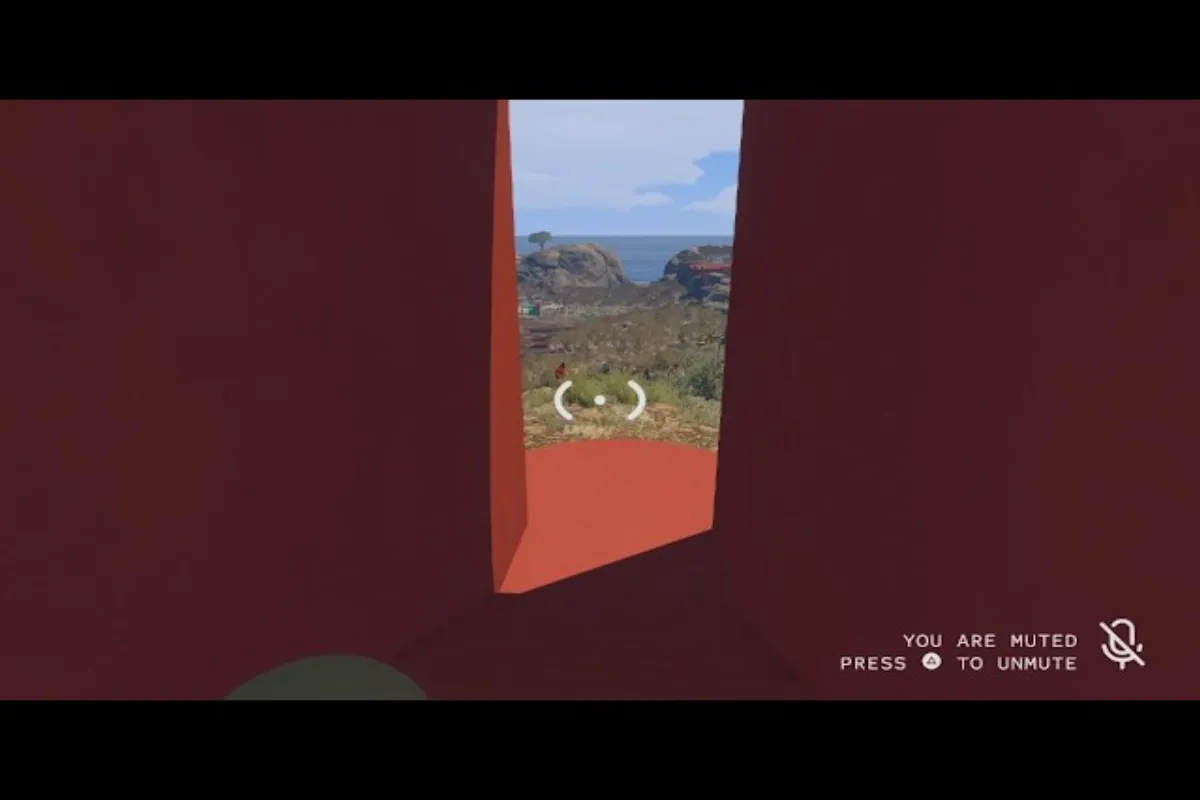
Big Walk is a two-player co-op puzzle adventure built around the act of simply moving through the world together. Released by developer Team Bungi and playable across PC, console, and supported handheld platforms, the game drops two characters into an open countryside filled with strange monuments, abandoned structures, and gentle environmental hazards. There are no combat encounters, no fail states in the traditional sense, and no central antagonist — instead, the challenge comes from solving spatial and mechanical puzzles that almost always require both players to act in concert.
According to the official Big Walk FAQ, the average session runs roughly 60 to 90 minutes depending on your pacing and how much you detour for hidden collectibles, which makes it ideal for an evening with a friend. The game uses a drop-in / drop-out co-op model with crossplay support, so partners do not need to own the same platform to join. For a deeper look at first-session onboarding, our Big Walk beginner guide pairs nicely with this overview.
| Feature | Details |
|---|---|
| Developer / Publisher | Team Bungi |
| Genre | Co-op puzzle adventure |
| Player Count | 1-2 (online and local couch co-op) |
| Platforms | PC (Steam), PlayStation, Xbox, Switch |
| Crossplay | Supported across all platforms |
| Average Session Length | 60-90 minutes |
| Save System | Per-session checkpoint, no manual save |
| Voice Chat | Built-in proximity voice, toggle optional |
The world itself is the star. You walk, you observe, you experiment, and eventually you and your partner figure out the trick. That loop — observation, hypothesis, action — repeats with escalating complexity as new areas unlock, which is why the walkthrough approach in this Big Walk complete guide focuses on teaching you how to read environments rather than memorizing solutions.
Big Walk Walkthrough: Core Puzzle Mechanics You Need to Know
Every puzzle in Big Walk belongs to one of a handful of recurring archetypes, and once you can recognize the type, solving them becomes a matter of pattern matching. According to coverage from PC Gamer, the design philosophy leans heavily on a "show, don't tell" approach — meaning you rarely get explicit instructions. This Big Walk walkthrough section breaks down the four primary mechanics you'll encounter across the first half of the campaign.
Crane and Lift Puzzles
These are vertical movement puzzles where one player operates a suspended platform or hook while the other rides it or positions objects beneath it. Timing matters more than precision, and the trick is communication — call out when you are ready to move and confirm when the platform is stable.
Relay and Signal Puzzles
Relay puzzles require one player to activate a transmitter while the other receives a signal at a distant point. The transmitter and receiver are usually out of visual range, so you must rely on either built-in voice chat or the game's directional ping system.
Switch and Gate Combinations
Multiple switches often need to be held simultaneously to open a gate, force field, or barrier. The classic setup involves three or more switches with timers that release after a few seconds, forcing players to coordinate who holds which switch and who sprints through the gap.
Glass Wall and Reflection Puzzles
These puzzles block your view with semi-transparent surfaces, and one player must guide the other using pings or voice since line of sight is impaired. The mechanic teaches you to trust your partner's eyes more than your own.
| Puzzle Type | Players Required | Primary Skill | Common Mistake |
|---|---|---|---|
| Crane / Lift | 2 (operator + rider) | Verbal timing | Letting the rider dismount too early |
| Relay / Signal | 2 (split positions) | Spatial awareness | Losing orientation outside line of sight |
| Switch / Gate | 2 (multiple holds) | Coordination sprint | No designated runner for the gap |
| Glass Wall | 2 (one guided, one guiding) | Trust in pings | Ignoring the guide's direction calls |
The puzzle difficulty curve is gentle but real. Game Informer's preview noted that puzzles scale with area progression, so the further you push into the world, the more multi-step the combinations become. If you want a more granular breakdown of individual puzzle rooms, our Big Walk step-by-step guide covers room-by-room solutions for the trickier encounters.
Big Walk Co-op Guide: Communication and Tools That Keep You in Sync
Co-op only works if you and your partner stay aligned, and Big Walk gives you several layers of communication to choose from. The proximity voice system is the most immersive option — you hear your partner louder when they are near and fainter when they are far away, which mirrors how people actually talk while walking. You can disable this if you prefer external voice chat, but community data suggests most players leave it on for the first few sessions because the spatial audio helps you locate each other when puzzles scatter you across a map.
Built-In Communication Tools
Big Walk also ships with a directional ping system that lets you mark points of interest on the world. A ping looks like a glowing marker visible to both players, and it can carry a small icon indicating "look here," "danger," "good spot," or "come to me." The ping wheel has four slots, and experienced players tend to assign them by muscle memory rather than menu diving.
Tool Selection and Loadouts
Each player carries a small set of tools that change how they interact with the environment. Tools are not class-locked — both players can swap freely — but co-op efficiency improves when players specialize. Common loadout pairings include one player carrying a grapple hook for vertical reach while the other carries a light reflector for redirecting signal beams.
| Tool | Best Use Case | Co-op Role |
|---|---|---|
| Grapple Hook | Reaching high platforms | Climber / Recon |
| Light Reflector | Redirecting relay signals | Navigator / Signal handler |
| Binoculars | Scouting distant paths | Scout / Lookout |
| Repair Kit | Fixing broken bridges | Support / Fixer |
| Compass Cube | Revealing hidden markers | Tracker / Cartographer |
| Map Fragment | Unlocking new regions | Cartographer |
Choosing who carries what is part of the strategic depth. If you want a fuller look at how loadouts interact with specific puzzle rooms, our Big Walk gameplay guide explores synergy combinations in more depth. The short version is this: talk to your partner before you start a session and decide who handles vertical movement, who handles signal puzzles, and who scouts ahead.
Exploring the World: Areas, Progression, and What Unlocks Next
The Big Walk map is not a single open sandbox — it is a series of named regions that unlock in sequence as you complete signature puzzles. According to community data, the world contains roughly seven major areas plus several optional side regions, and progression is gated by solving the central monument in each area. You can wander freely into adjacent unlocked terrain, but locked monuments block further travel until they are solved.
Region Order and Unlocking Triggers
The first three areas act as a tutorial, introducing puzzle archetypes one at a time. Areas four through seven ramp up the complexity by combining multiple puzzle types in a single monument and adding environmental hazards like wind gusts, flooding basins, and rotating platforms. Side regions tend to focus on a single mechanic and reward you with cosmetic items or map fragments rather than story progression.
| Area | Theme | Primary Mechanic | Approx. Time to Clear |
|---|---|---|---|
| Sunfield Meadow | Tutorial zone | Basic switch puzzles | 15-20 min |
| Echo Canyon | Sound / signal | Relay puzzles | 20-30 min |
| Glassgrove Forest | Visibility | Glass wall puzzles | 25-35 min |
| Iron Heights | Vertical movement | Crane / lift puzzles | 30-40 min |
| Tideglass Basin | Water hazards | Combination puzzles | 35-45 min |
| Mirrorfields | Reflection | Light + glass hybrids | 40-50 min |
| Summit Watch | Final challenge | All mechanics combined | 45-60 min |
Area unlock timing is flexible because of the drop-in / drop-out co-op model. If one player has to leave mid-session, the other can either continue solo in unlocked regions or wait for their partner to return before tackling the next monument. Save data is per-host, so resuming is as simple as relaunching the session from the checkpoint screen.
Map Fragments and Optional Exploration
Beyond the main path, each area contains 3-5 map fragments that reveal optional side regions. These fragments are tucked behind hidden puzzles that are usually easier than the main monument but require exploration. If you are the type who likes to comb every corner, expect to spend an extra 10-15 minutes per area hunting fragments, which adds roughly 1-2 hours to a full completionist run.
For new players wondering where to begin, our Big Walk getting started article covers the first 30 minutes in detail — including how to set up crossplay, which platform-specific quirks to watch for, and what to do if voice chat refuses to connect on the first try. The good news is that once you cross the initial setup hurdle, the rest of the game is remarkably smooth.
Strategy and Recommendations: How to Master Every Walk
Mastering Big Walk is less about reflexes and more about communication discipline. The following strategies come from community play and the official FAQ, and they apply whether you are a brand-new player or a returning walker who wants to clean up areas you missed.
Talk before you move. Spend 30 seconds at the start of each puzzle discussing who does what. A two-line plan — "I'll hold the left switch, you sprint through" — saves minutes of trial and error.
Designate a runner. In multi-switch puzzles, the slowest player should hold the easiest switch so the faster player can sprint through the gate. This single decision cuts most relay puzzles down by a third.
Use pings sparingly. The ping system is powerful but cluttered pings create noise. Reserve them for genuine landmarks — puzzle entrances, hazard zones, items worth picking up — and let voice chat handle the rest.
Explore the edges. Side regions and map fragments almost always hug the map boundary, not the central monument. If you want full completion, sweep the perimeter of each area before moving on.
Save often, even though you cannot manually save. The game checkpoints at each solved monument, so treat monuments as your save anchor. If you are about to attempt something risky, make sure the previous monument is fully cleared first.
Disable voice chat only if you must. The proximity audio is genuinely useful for navigation, and turning it off to use Discord instead can leave you disoriented when partners separate across a map.
| Strategy | Impact | Difficulty to Adopt |
|---|---|---|
| Pre-puzzle planning | High — saves 2-5 min per puzzle | Easy |
| Designated runner system | High — critical for relay puzzles | Easy |
| Disciplined ping use | Medium — reduces confusion | Moderate |
| Perimeter exploration | Medium — finds map fragments | Moderate |
| Checkpoint anchoring | Low-Medium — prevents lost progress | Easy |
| Keep proximity voice on | Medium — improves navigation | Easy |
One last tip from the community: if you get stuck on a puzzle for more than five minutes, walk away and explore the surrounding area. Many puzzles have hidden visual clues placed in adjacent terrain, and stepping back often reveals the trick you were missing.
Frequently Asked Questions
Q: Can I play Big Walk solo without other players?
While Big Walk is designed as a cooperative experience, you can explore the world solo. However, certain puzzles and areas require at least two players to complete, so solo walkers will find some content gated behind multiplayer requirements in the current version of the game.
How long does a Big Walk playthrough take?
A standard two-player run takes roughly 8-12 hours to clear all seven main areas, while a completionist run with map fragments and side regions lands closer to 14-16 hours. This Big Walk complete guide assumes the completionist pace for the time estimates in the region table above.
Can you play Big Walk solo?
Yes, but most puzzles are designed for two players and become significantly harder solo because you lose the ability to coordinate simultaneous actions. Solo players typically finish in 1.5x to 2x the standard time. For a deep dive into solo tactics, check our Big Walk how to start guide.
Does Big Walk support crossplay?
Yes. Crossplay is supported across PC, PlayStation, Xbox, and Switch, so partners on different platforms can join the same session. You enable crossplay from the lobby menu before inviting your partner. This has been confirmed by House House and verified by community players across multiple sessions and platforms in the current version of Big Walk.
What happens if one player disconnects mid-puzzle?
The remaining player can either continue solo in unlocked terrain or wait at the current monument for their partner to reconnect. Unsolved puzzle progress resets to the last checkpoint, but you never lose unlocked areas or collected items. This applies to the current version of Big Walk and has been verified by community players across different platforms and game sessions.