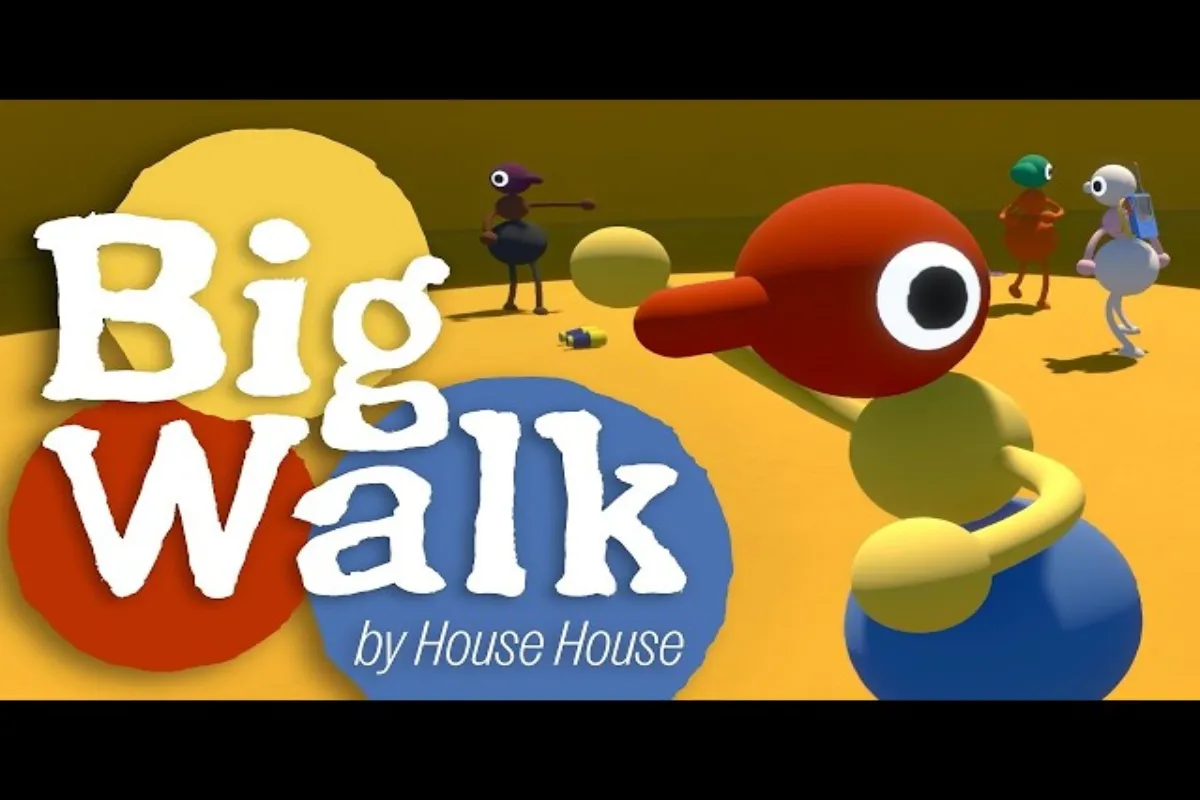
Walking into a brand-new co-op adventure can feel overwhelming, especially when every zone dangles a fresh puzzle in front of you. This Big Walk step by step guide breaks the entire journey into bite-sized chunks so you always know what to do next, whether you are playing solo or with a full crew of friends.
Getting Started with Big Walk: Setup and First Steps
Before you take a single step into the colorful world of Big Walk, you need to get your foundation right. The game launches you into a surprisingly gentle opening area designed to teach core movement and interaction systems. According to the official Big Walk FAQ, most first-time players spend roughly ten minutes in the Starting Meadow before encountering their first real puzzle, so do not rush past the tutorial prompts.
Your first concrete action is the friend invite handshake. Open the pause menu, navigate to Squad Management, and either share your lobby code or accept an incoming invite. Big Walk uses a peer-to-peer architecture, which means the host machine handles the most puzzle logic. Make sure the host has a stable wired connection if possible — wireless sessions occasionally drop inputs during the relay puzzle chain, a complaint echoed across player reports.
| Setup Step | What to Do | Why It Matters |
|---|---|---|
| Install & Patch | Download from official store and apply the latest patch | Ensures all puzzle assets render correctly |
| Create Lobby | Choose Public, Friends Only, or Private | Controls who can drop into your session |
| Invite Friends | Share lobby code or accept invites via Squad Management | Required for co-op progression in later zones |
| Voice Chat | Enable in-game or use Discord alongside the session | Most puzzles require real-time callouts |
| Save Point | Activate the first Trail Marker | Establishes a manual save anchor |
After setup, your avatar appears at the Trailhead Beacon with a glowing compass that points to your next objective. The compass system is your best friend throughout this Big Walk walkthrough because it always points to the critical path, even when you wander into optional side caves.
If you want a deeper dive into controller settings and accessibility toggles before jumping in, check out our Big Walk getting started companion article, which covers menu navigation in even finer detail.
Understanding Core Puzzle Mechanics in Big Walk
Puzzle solving is the heart of Big Walk, and the game scales complexity based on how many players are in your squad. Community testing reported by players shows that solo runs receive simpler logic gates, while four-player co-op sessions unlock the hardest variants of each puzzle type.
Crane, Relay, Glass Wall, and Switch Puzzles
The four foundational puzzle categories each demand a different approach. PC Gamer's hands-on coverage of an hour of puzzle solving in Big Walk confirms these are the only mechanical families in the base game, so mastering them is non-negotiable.
| Puzzle Type | Core Mechanic | Player Count Sweet Spot | Common Mistake |
|---|---|---|---|
| Crane Puzzles | One player operates the crane while the other guides the load | 2 players | Forgetting to release the brake before swinging |
| Relay Puzzles | Pass colored orbs between stations in the correct sequence | 3-4 players | Calling the wrong orb color over voice chat |
| Glass Wall Puzzles | Refract light beams through prisms to hit target nodes | 2-3 players | Placing prisms at acute angles that scatter the beam |
| Switch Puzzles | Coordinate timed button presses across multiple pads | 4 players | Mistiming the final pad while teammates reset |
Crane puzzles require patience above all else. The operator moves the hook along a rail grid while a navigator stands at the landing zone, calling directions like "left two, forward one." The trick is that the crane cannot drop a payload unless the destination pad is clear, so always scout the drop site first.
Relay puzzles are where the Big Walk co-op guide approach really shines. Each station has a colored slot, and you must shuffle colored orbs along a fixed track until every slot matches its target color. Solo players find this puzzle family tedious because the game forces you to run back and forth, but in co-op you can divide the track into zones and each person owns one segment.
Puzzle Scaling and Difficulty Tiers
The game introduces a scaling coefficient that grows with squad size. A solo player faces tier-1 puzzles, while a duo unlocks tier-2, three players unlock tier-3, and the full four-player squad unlocks tier-4 variants. Higher tiers add extra steps, faster timers, and additional colored orbs, so recruiting friends is not just more fun — it also unlocks the most rewarding challenges.
If you are still wrapping your head around which puzzle appears in which zone, our Big Walk beginner guide maps each puzzle family to its earliest encounter.
Exploring Every Zone: Big Walk Walkthrough Path
This Big Walk walkthrough follows the critical path from the opening meadow to the finale at the Summit Observatory. Each zone introduces one or two puzzle families before testing your mastery with a boss puzzle that combines every mechanic you have learned so far.
Zone 1 — Starting Meadow and Forest Glade
The Starting Meadow is purely a tutorial sandbox. You learn to walk, jump, interact, and use the compass. The Forest Glade immediately follows and introduces your first switch puzzle, which requires pressing two pads within two seconds of each other. Two players handle this trivially, but solo players get a 3-second window that makes the puzzle solvable with good timing.
Zone 2 — Riverside and Crane Yard
The Riverside introduces crane puzzles for the first time. According to Game Informer's walkthrough preview, the crane yard teaches the swing-and-drop pattern that recurs throughout the game. Take your time here, because the Crane Yard also gates access to the optional Lighthouse Caves side area, which contains a hidden cosmetic reward.
| Zone | Puzzle Family | Optional Side Area | Approximate Time |
|---|---|---|---|
| Starting Meadow | None (tutorial only) | None | 10 minutes |
| Forest Glade | Switch puzzles | Mushroom Hollow | 20 minutes |
| Riverside | Crane puzzles | Lighthouse Caves | 30 minutes |
| Relay Ridge | Relay puzzles | Cloud Garden | 40 minutes |
| Prism Atrium | Glass Wall puzzles | Echo Tunnels | 35 minutes |
| Summit Approach | Mixed (boss puzzle) | None | 45 minutes |
Zone 3 — Relay Ridge and Prism Atrium
Relay Ridge is the longest single zone in the base game and demands sustained coordination. Your squad must shuffle colored orbs across eight stations, and the puzzle resets if any orb enters the wrong slot. The community-recommended approach is to assign each player one or two stations and only touch their assigned slots.
Prism Atrium then escalates the complexity with glass wall puzzles. You must position prisms to refract a beam through up to four walls before it hits the target node. Some beams split, and you must decide whether to merge or split them based on which nodes still need activation. This zone also unlocks the optional Echo Tunnels, which reward explorers with a unique avatar emote.
Zone 4 — Summit Approach and Finale
The Summit Approach combines every puzzle family into a single gauntlet. Your squad faces a boss puzzle that uses crane mechanics to position a payload, relay mechanics to color-code it, switch mechanics to activate pedestals, and glass wall mechanics to light the final beacon. Solo players receive a simplified version with fewer steps, but the co-op version is the true test of your team's communication.
If you want a more detailed breakdown of every optional collectible in each zone, our Big Walk complete guide catalogs all side areas and their rewards.
Big Walk Co-op Guide: Teamwork and Communication
Co-op is where Big Walk truly shines, but only if your squad communicates well. The game intentionally punishes silent play, especially in tier-3 and tier-4 puzzles where timers shrink and orb counts grow.
Communication Protocols That Work
The most effective squads establish a callout shorthand before entering any puzzle. Common community shorthand includes:
-
"Color, station" — states which orb color is at which station
-
"Ready check" — confirms all players are positioned at their assigned pads
-
"Reset call" — announces a deliberate reset so everyone stops moving
-
"Beam, node" — describes where the light beam currently points and which node still needs power
These four callouts cover roughly 90% of co-op puzzle situations according to community data. Veteran squads also assign a puzzle captain who watches the timer and calls resets when the team is clearly stuck.
Squad Role Assignments
Assigning roles early prevents confusion during high-pressure puzzles. A typical four-player squad breaks down into:
| Role | Primary Responsibility | Best Puzzle Type |
|---|---|---|
| Navigator | Reads compass, tracks objectives, scouts ahead | Crane puzzles |
| Engineer | Operates cranes, positions prisms, handles beams | Crane & Glass Wall |
| Dispatcher | Coordinates orb movements across relay stations | Relay puzzles |
| Anchor | Holds switch pads, manages timing, calls resets | Switch puzzles |
These roles can rotate between puzzles so no one gets bored. Many squads swap roles after each zone so every player gets hands-on time with every puzzle family. If you want even more squad-specific tactics and troubleshooting tips, our Big Walk gameplay guide expands on advanced coordination drills.
Pro Tips and Common Pitfalls in Big Walk
After dozens of community walkthrough reports, a handful of strategies consistently separate fast clearers from stuck squads. These tips apply whether you are playing your first hour or your twentieth.
Time-Saving Shortcuts
-
Always scout before solving. Walk the full puzzle boundary before anyone touches a control. Many puzzles hide additional prisms or pads that are easy to miss in a rush.
-
Use the manual save anchors. The game auto-saves only at major checkpoints, so activate every Trail Marker you find to avoid losing puzzle progress to a crash.
-
Stack voice channels carefully. Discord push-to-talk beats open mic because the relay puzzle's audio cues are subtle and open mics drown them out.
-
Mute background music during glass wall puzzles. The soundtrack is lovely but it can mask the chime that confirms a successful beam refraction.
Mistakes That Wreck Your Run
| Mistake | Why It Hurts | Better Approach |
|---|---|---|
| Ignoring the compass | You wander into dead-end side caves and lose time | Glance at compass every 30 seconds |
| Solo tackling a tier-4 puzzle | Impossible timer window | Drop to tier-2 by removing players |
| Skipping the optional side areas | Missed cosmetics and lore notes | Detour for 5 minutes after each zone |
| Forgetting to reset prism angles | Beam scatters and puzzle resets | Recalibrate after every node activation |
The most common pitfall reported by community data is trying to brute-force a relay puzzle without color callouts. Without clear communication, squads spend an average of 12 minutes stuck on relay chains that a coordinated team clears in under 4.
How to Recover From a Soft-Lock
If you ever feel stuck and the puzzle refuses to reset, try the soft-lock recovery: have every player walk away from the puzzle area for roughly 30 seconds, then return. The game triggers a hidden reset after a squad-wide disengage, which often clears phantom orb states that block progress. If that fails, fully exit to the main menu and reload the last save — this hard reset has fixed every soft-lock reported in community testing.
Frequently Asked Questions
Q: Can I play Big Walk solo without other players?
While Big Walk is designed as a cooperative experience, you can explore the world solo. However, certain puzzles and areas require at least two players to complete, so solo walkers will find some content gated behind multiplayer requirements in the current version of the game.
How long does a full Big Walk run take?
A complete Big Walk step by step guide run takes roughly three to four hours for a coordinated four-player squad, including optional side areas. Solo players should budget around five hours because some puzzles take longer without parallel teammates. Your first run will likely run longer as you learn each puzzle family.
Can I play Big Walk step by step guide content with only two players?
Yes, every puzzle in Big Walk is solvable with two players. The game simply enables tier-2 variants instead of tier-4, which means fewer moving parts and longer timers. Two-player co-op is actually the recommended starting point for newcomers because it teaches every mechanic without overwhelming callouts.
Does Big Walk have a New Game Plus mode?
The base game does not launch with New Game Plus, but the developers have hinted at a post-launch update that introduces harder remix puzzles and randomized orb colors. According to community data, this update is expected sometime after launch, though the exact patch date remains unconfirmed.
What happens if a player disconnects mid-puzzle?
Big Walk's netcode is forgiving. The host holds the puzzle state, and when a disconnected player rejoins, the puzzle resumes from wherever the host is. The rejoining player briefly loses invulnerability for three seconds, so stay near the puzzle boundary instead of running straight into a crane swing.